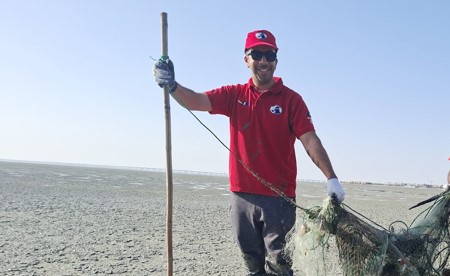
Diving team retrieves abandoned fishing net south of Kuwait Gulf, off the coast of Salwa
&cropxunits=450&cropyunits=337&w=770)
The Kuwaiti diving team affiliated with the Environmental Volunteer Foundation successfully retrieved and removed large quantities of abandoned fishing nets south of Kuwait Bay along the Salwa coast, as part of its ongoi
Translated by Qiyas from الأنباء — Original source
The Kuwaiti diving team affiliated with the Environmental Volunteer Foundation successfully retrieved and removed large quantities of abandoned fishing nets south of Kuwait Bay along the Salwa coast, as part of its ongoing efforts to protect and rehabilitate the country’s marine ecosystems.
Team leader Walid Al-Fadil told KUNA that the team extracted the nets from the shoreline, where they posed a direct and destructive threat to wildlife in the area, in cooperation with the Ministry of Interior.
Al-Fadil added that this operation is part of the team’s periodic plan to clean coastal and marine sites of harmful debris. The nets were fully removed and transported to designated disposal sites to protect marine life from the danger of “ghost fishing,” which involves the entanglement and death of fish and seabirds without any productive outcome.
He emphasized that the team’s intensified operations at these specific sites stem from the exceptional environmental significance of Kuwait Bay, which is classified globally as one of the largest natural nurseries for fish and aquatic life, and a safe haven for the reproduction of various marine species.
He clarified that the bay serves as an ecological lung and a key stopover for migratory birds, making the preservation of its integrity and ecological stability an absolute necessity for food security and biodiversity in the State of Kuwait.
Al-Fadil called on beachgoers and fishermen to strictly comply with directives issued by official authorities and to adhere precisely to the Environmental Protection Law, which prohibits fishing in the bay and the dumping of waste and fishing gear.
He stressed that the Ministry of Interior and regulatory bodies would not hesitate to enforce the law and penalize violators, noting that protecting the marine environment is a societal responsibility that requires collective efforts to safeguard national resources for future generations.
