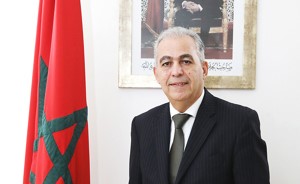
The Glorious Accession Day: A Royal Vision to Consolidate Development and Strengthen International Partnerships.. By: Ali Ibn Issa, Ambassador of the Kingdom of Morocco to the State of Kuwait
&cropxunits=300&cropyunits=450&w=770)
The Kingdom of Morocco will celebrate on Thursday, July 30, 2026, the 27th anniversary of the accession of His Majesty King Mohammed VI, may God support him, to the throne of his blessed ancestors. This occasion holds a special place in the hearts of the Moroccan people, as it embodies the continuity of the Moroccan state, the unity of the nation, and the deep historical bond between the glorious Alawite throne and the Moroccan people, within the framework of the legitimate pledge of allegiance that has constituted, over centuries, one of the foundational constants of the Moroccan state and a symbol of its stability and unity.
The celebration of the Throne Day transcends its historical symbolism, serving as an annual milestone to assess the achievements of the major projects underway in the Kingdom and to renew the resolve to continue the path of reform and development. Since His Majesty King Mohammed VI ascended the throne in 1999, Morocco has embarked on a comprehensive transformation process centered on modernizing the economy, enhancing investment, developing infrastructure, consolidating territorial justice, and expanding the Kingdom’s openness to its regional and international environment. This has positioned Morocco today as a reliable and active partner, highly regarded at both the regional and international levels.
This royal vision is grounded in a deep understanding of the interdependence between political stability and economic development, between institutional strength and investment attractiveness, and between social progress and openness to the world. From this perspective, the reforms witnessed by the Kingdom were not merely a temporary response to international changes, but rather part of an integrated national project that positioned investment as a driver of development, infrastructure as a catalyst for competitiveness, and human capital as the foundation for economic take-off.
This vision has yielded tangible results. The Moroccan economy recorded growth of 4.9% in 2025, with gross domestic product reaching approximately 1.72 trillion dirhams, reflecting the resilience of the national economy and its ability to adapt to international fluctuations. This performance benefits from a diversified production base, stable economic and financial institutions, and ongoing reforms aimed at improving the business climate and strengthening investor confidence.
Morocco has continued to consolidate its presence within global value chains. In 2025, the Kingdom’s goods exports reached approximately 46.9 billion dirhams, while revenues from foreign direct investment rose to over 5.6 billion dirhams, underscoring the attractiveness of the Moroccan economy and the legal and institutional stability, as well as advanced infrastructure, it offers.
In the industrial sector, Morocco has become the leading car producer in Africa, with an annual production capacity of nearly 700,000 vehicles and a local integration rate approaching 70%, with a target to raise this to 80% by 2030. The aerospace manufacturing sector has also seen significant development; the Kingdom now hosts approximately 150 specialized companies, providing nearly 26,000 direct jobs and contributing to the manufacturing of components for major global companies, with a local integration rate reaching 42%.
In the field of energy transition, clean energy sources in Morocco continue to show a notable upward trend, as the Kingdom gradually approaches its strategic goal of achieving 52% of its national electricity mix by 2030. Furthermore, the Kingdom has strengthened its position as a logistics platform with a global reach, thanks to the Tanger Med Port Complex, which handled over 11 million containers in 2025, cementing its status as the leading port in Africa and the Mediterranean, and a pivotal hub connecting Morocco to major international trade routes.
The organization of the 2030 FIFA World Cup finals by Morocco, alongside Spain and Portugal, represents a new milestone in the Kingdom’s development path and a historic opportunity to accelerate investment in infrastructure, transport, tourism, urban development, services, and the digital economy. This international event also reflects the organizational expertise Morocco has accumulated and the trust it enjoys among its partners worldwide.
In this context, the southern provinces of the Kingdom continue to drive national developmental dynamics under the new development model for the southern provinces launched by His Majesty King Mohammed VI, with a financial envelope of approximately 87.5 billion dirhams. Completed or ongoing projects cover sectors such as roads, ports, renewable energy, fisheries, industry, and services, as well as the development of social facilities, training, and urban infrastructure.
The Dakhla Atlantic Port project stands out among these strategic initiatives, as it enhances the competitiveness of the southern provinces, supports their openness to their African and Atlantic surroundings, and consolidates their status as an emerging economic hub and a platform for exchange and investment.
This developmental path runs parallel to continuous diplomatic gains, amid growing international support for the Moroccan Autonomy Initiative as the serious, realistic, and credible solution, as affirmed by relevant UN Security Council resolutions, most recently Resolution 2797 issued on October 31, 2025, which recognized that genuine autonomy under Moroccan sovereignty is the most viable solution to resolve the fabricated regional dispute. This development underscores the readiness of the approach led by His Majesty King Mohammed VI, which combines the preservation of territorial integrity, the enhancement of development, and the building of partnerships based on transparency, trust, and mutual respect.
In this regard, we cannot but commend the steadfast and fraternal position of the sister State of Kuwait, its leadership, government, and people, in supporting the territorial integrity of the Kingdom of Morocco and the Autonomy Initiative. This noble stance is consistently reaffirmed by Kuwait in various regional and international forums, reflecting the depth of fraternal relations and sincere solidarity linking the two sister countries.
On the level of bilateral relations, the Kingdom of Morocco and the sister State of Kuwait continue to consolidate a distinguished partnership based on entrenched fraternal ties and historical relations characterized by solidarity and mutual respect. This partnership draws strength from the shared will of the leaders of both countries, His Majesty King Mohammed VI and his brother His Highness Sheikh Meshal Al-Ahmad Al-Jaber Al-Sabah, may God protect them, to elevate bilateral cooperation to the level of the fraternal bonds and mutual appreciation shared by the two peoples.
Moroccan-Kuwaiti economic relations witnessed positive dynamism in the past year, manifested in the organization of two economic forums in Kuwait, in partnership with the Kuwait Chamber of Commerce and Industry, the Moroccan Agency for Investment and Exports, the Moroccan Confederation of Exporters, and the Moroccan Federation of Food Industries. These meetings contributed to expanding communication channels between businessmen, promoting available investment opportunities, and exploring new areas for joint cooperation.
While figures and indicators reflect the scale of the transformation the Kingdom has undergone, their true significance lies in what they embody: continuity in vision and steadfastness in choices. Morocco has not built its economic competitiveness on a fleeting circumstance, but on a long-term project based on institutional strength, infrastructure development, investment in human capital, openness to balanced partnerships, and confidence in the Kingdom’s ability to turn contemporary challenges into opportunities for progress. If the 27th anniversary of the glorious Throne Day is an occasion to recall the achievements made, it simultaneously represents a milestone for renewing confidence in the future of the Kingdom of Morocco and its capacity to continue consolidating a development model based on stability, openness, innovation, and investment.
