Specialists: Early Detection Enhances Chances of Bone Cancer Recovery
&cropxunits=450&cropyunits=300&w=770)
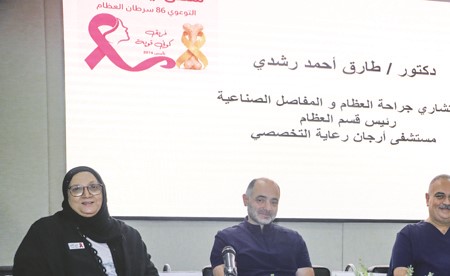
Nada Abu Nasr: The Women’s Social and Cultural Association, in collaboration with the “Be Strong” campaign, hosted the 86th awareness meeting, which shed light on bone cancer. The event featured a distinguished panel of
Translated by Qiyas from الأنباء — Original source
Nada Abu Nasr: The Women’s Social and Cultural Association, in collaboration with the “Be Strong” campaign, hosted the 86th awareness meeting, which shed light on bone cancer. The event featured a distinguished panel of consultants who emphasized the importance of recognizing early symptoms and not ignoring persistent pain, as early detection plays a crucial role in improving treatment outcomes. The meeting included specialized medical discussions on bone cancer, focusing on enhancing health literacy to reduce the risks associated with delayed diagnosis.
At the outset, Dr. Tarek Rashdi, an orthopedic surgery consultant, stressed the importance of raising awareness about early symptoms and not disregarding them. He explained that bone cancer is of two types: primary, which originates in the bone, and secondary, which spreads to the bone from another organ. Each type has different diagnostic approaches, treatments, and prognosis rates. He further noted that it is difficult to determine whether the disease is hereditary in general, as this depends on the type and origin of the cancer. He affirmed that the most prominent symptom is persistent or recurrent pain, particularly at night or in a fixed location such as the spine or limbs. The pain may be accompanied by swelling, or there may be no symptoms at all. Therefore, he advised consulting a doctor if pain persists, as early detection increases treatment chances and improves outcomes.
For his part, Dr. Hussein Bahbahani, head of the Anesthesiology and Intensive Care Department at Al-Razi Hospital, stated that bone cancer accounts for only about 1% of all cancer types, while the vast majority of bone injuries result from cancer spreading from other organs. He highlighted that key symptoms of bone cancer include unexplained weight loss, loss of appetite, severe and persistent bone pain, and fractures that occur without injury or accident. Additionally, nerve compression may cause pain or numbness in various parts of the body.
Speaking about pain management, he clarified that it is a modern medical specialty whose goal is not limited to pain relief alone, but focuses on improving the patient’s quality of life. This enables patients to sleep, move, rely on themselves, spend time with their families, and engage in daily activities as much as possible, while avoiding side effects that might hinder their lives. He also emphasized the importance of psychological support, noting that a cancer diagnosis can be a shock to the patient and their family. Anxiety or depression can exacerbate the perception of pain and affect treatment continuity. Therefore, pain management relies on an integrated medical team comprising pharmacological treatment, psychological support, and rehabilitation, with the aim of improving the patient’s physical and mental condition and enhancing their quality of life.
In his turn, Dr. Ashraf Youssef, an orthopedic and joint surgery consultant, discussed his participation in the awareness lecture on bone cancer, explaining that its objective is to correct misconceptions. Not all pain or tumors indicate cancer; tumors may be benign or malignant, and this can only be determined through medical examination. He affirmed that early detection facilitates treatment and improves its results. He pointed out that bone cancer is very rare, accounting for less than 1% of all cancers, with no specific cause identified. However, it may be linked to genetic or environmental factors, such as exposure to radiation or certain chemicals. In rare cases, it may be associated with specific injuries. He also clarified that the radiation used in medical examinations, such as X-rays and CT scans, is delivered in low and safe doses when necessary. Dangerous radiation, on the other hand, results from nuclear accidents, reactors, or wars, and is what may increase the risk of developing cancer.
On her part, Liya Juma, the awareness ambassador and founder of the “Be Strong” campaign, stated that the goal of the meeting is to raise awareness about the importance of early detection, as bone cancer symptoms may resemble ordinary bone pain or rheumatism, potentially delaying diagnosis. She also stressed the importance of disseminating health culture and encouraging the community to undergo early screenings to improve treatment chances. She announced that the campaign will continue its activities throughout August, which is dedicated to leukemia awareness, with a focus on the latest treatment methods, especially for children.
Meanwhile, Dr. Fajr Al-Husseini, a member of the Women’s Social and Cultural Association and head of the health program, spoke about the collaboration with the “Be Strong” campaign to organize an awareness event in observance of Bone Cancer Awareness Month. She explained that the objective is to raise awareness about the importance of prevention and early detection, and to inform the public about factors that help reduce risks, such as healthy nutrition, regular exercise, and adopting a healthy lifestyle. She emphasized that prevention is better than cure.
