Foreign Ministers of the Cooperation Council discuss intensifying coordination regarding freedom and safety of navigation in the Strait of Hormuz, emphasizing the importance of prioritizing diplomatic solutions
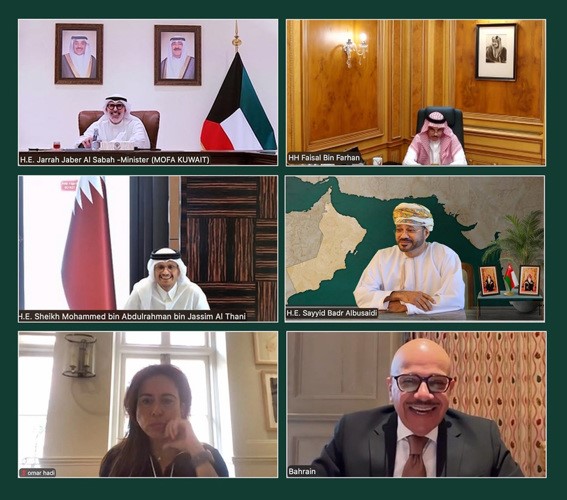
The foreign ministers of the Gulf Cooperation Council (GCC) states held a consultative meeting via video conferencing yesterday, attended by Kuwaiti Foreign Minister Sheikh Jara Al-Jaber, Qatari Prime Minister and Foreig
Translated by Qiyas from الأنباء — Original source
The foreign ministers of the Gulf Cooperation Council (GCC) states held a consultative meeting via video conferencing yesterday, attended by Kuwaiti Foreign Minister Sheikh Jara Al-Jaber, Qatari Prime Minister and Foreign Minister Sheikh Mohammed bin Abdulrahman bin Jassim Al Thani, Saudi Foreign Minister Prince Faisal bin Farhan, Bahraini Foreign Minister Abdullatif bin Rashid Al Zayani, and Omani Foreign Minister Badr Al Busaidi.
The ministers exchanged views on developments in the current phase, updates on ongoing negotiations, and efforts to advance toward practical understandings that contribute to reducing tensions and enhancing the regional environment of security and stability.
The meeting also discussed ways to intensify coordination and consultation among GCC member states regarding issues related to freedom and safety of navigation in the Strait of Hormuz, ensuring the rights of passage and transit, the smooth flow of shipping, trade, and supplies, in accordance with international law, while safeguarding the sovereign rights of all states bordering the Gulf waters.
During the meeting, the ministers emphasized the importance of continuing joint efforts, prioritizing political and diplomatic solutions, and creating favorable conditions for building trust and reaching acceptable solutions for all parties.
In parallel, the ministers held a series of calls with their counterparts in relevant countries. A telephone conversation took place between Qatari Prime Minister and Foreign Minister Sheikh Mohammed bin Abdulrahman and Jordanian Deputy Prime Minister and Foreign Minister Ayman Safadi, during which they reviewed the cooperative relations between the two countries and ways to support and strengthen them, as well as the latest regional developments, particularly diplomatic efforts and joint coordination to de-escalate tensions and enhance security and stability in the region.
According to the Qatar News Agency (QNA), the Prime Minister and Foreign Minister emphasized during the call the necessity for all parties to commit to dialogue and diplomacy, and to implement what was agreed upon within the framework of the memorandum of understanding between the United States and Iran, including guaranteeing freedom of navigation in the Strait of Hormuz, to maintain regional security, preserve achieved gains, and enhance regional stability. He reiterated Qatar’s full support for all efforts aimed at defusing tensions and reaching a comprehensive agreement that achieves sustainable peace in the region.
Saudi Foreign Minister Prince Faisal bin Farhan received a similar phone call from his Jordanian counterpart. According to the Saudi Press Agency (SPA), the call discussed the latest developments in the region and ways to enhance and support joint efforts to maintain regional security and stability and ensure freedom of maritime navigation in accordance with international law, while reiterating condemnation and denunciation of Iranian attacks and those carried out by its affiliated terrorist militias in Yemen and Iraq against the Kingdom and regional states.
Meanwhile, Reuters reported yesterday that Oman had presented a proposal to Iran regarding a joint regional mechanism for managing the Strait of Hormuz through voluntary fees. The source added that, according to the Omani proposal, which enjoys regional support, Iran would not exercise unilateral control over the vital waterway. The proposal is based on the model of the Strait of Malacca, where users of the strait voluntarily contribute to funding navigation services, environmental protection, and search and rescue operations.
