"Zeen": Kuwait University Students Transform Market Challenges into Innovative Technological Solutions
&cropxunits=450&cropyunits=281&w=770)
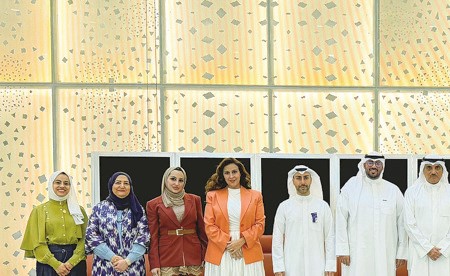
Zain announced its support and enablement of the Capstone Applied Projects program in the Computer Science Department at the College of Science, Kuwait University, which provided students with the opportunity to apply their academic knowledge and technical skills to develop solutions and prototypes that address real-world challenges in market and business environments.
Zain presented students with a set of actual challenges and needs facing various sectors, inviting them to study, analyze, and innovate technical solutions to address them. These challenges spanned diverse fields, including artificial intelligence, the Internet of Things (IoT), business continuity, digital security, inclusion and accessibility, corporate compliance, and professional skills development.
Zain’s support for the program stems from its vision to invest in the digital capabilities of youth and to provide an educational environment that fosters creativity, critical thinking, and teamwork, while bridging theoretical knowledge with practical application. This approach aims to enhance students’ readiness to enter the fields of technology, engineering, science, and mathematics, which have become among the top priorities of modern labor markets.
Zain Innovation Ambassadors actively participated in various stages of the program, leveraging their expertise and time to prepare challenge briefs, provide technical and professional mentoring, and share knowledge and practical experience with students throughout the project development phase. The ambassadors also assessed the initial feasibility of proposed prototypes, evaluated their alignment with market needs and corporate objectives, and explored their potential to deliver added value to Zain and the targeted sectors. Additionally, they investigated opportunities to develop these prototypes into viable solutions or entrepreneurial ventures that could be launched in the market in the future.
The program resulted in the development of a range of innovative technical projects. Among them was “Creno,” a smart platform leveraging artificial intelligence to collect and analyze information from official and public sources, helping banks and financial institutions enhance the efficiency of their screening, compliance, and anti-money laundering operations while providing clear and auditable results.
Other projects included the HyperLocal platform, which utilizes IoT technologies to assist small and medium-sized enterprises in monitoring compliance with regulations and requirements through real-time monitoring, instant alerts, and risk prediction, while also enabling regulatory authorities to remotely monitor establishments.
Students also presented INERTIA, a digital platform powered by AI designed to unify and manage business continuity plans, assess readiness levels, enhance governance, and track disaster recovery plans, while keeping data within the organization’s internal environment.
In the realm of community solutions and digital security, students developed “Al-Mutarjim” (The Translator), an application that employs computer vision and AI technologies to translate Kuwaiti Sign Language into Arabic in real time. The app displays the translation both as text and through a 3D avatar, facilitating communication and enhancing access to services.
Another project was Zain ReVerse, a smart system for detecting fraudulent calls in real time by analyzing conversations in Arabic, assessing risk levels, and generating automated reports. This system supports user protection and the monitoring of suspicious cases.
