Al-Awaimri: Al-Janada's location is "Umm Dirah" and "Kabar"
&cropxunits=338&cropyunits=450&w=770)
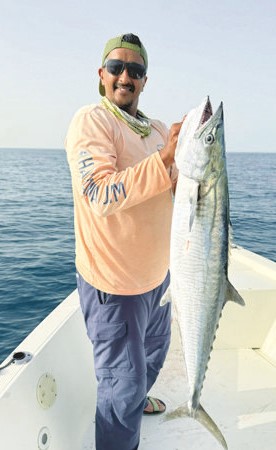
Passionate about fishing and handling the line, he charted his own course at sea in 2012, relying on himself and mastering the art of catching most fish species. He developed a deep affection for the jund and tuna, uncovering their secrets. In today’s “My Sea” feature, we sit down with fisherman Faisal Al-Owaimri, who shares the story of his early maritime journey, from the Qaruh region to the southern banks and reefs. He discusses the peak seasons for most fish species in the southern waters, the best spots and techniques for catching grouper and barracuda, and when king mackerel are most abundant, along with his preferred bait. Al-Owaimri also reveals prime fishing locations for snapper and rabbitfish, details the seasonal migration of tuna through Kuwaiti waters, and outlines the best methods for catching them, highlighting what makes them unique. Additionally, he provides a detailed explanation of modern fishing techniques (using the “jaq”), shares the primary concerns of local fishermen, and offers advice to fellow anglers. Here are the details.
At the outset, fisherman Faisal Al-Owaimri says, “The sea and fishing are an endless passion. I became hooked on handline fishing in 2012, when I would go out with friends and my cousins, relying on myself. I constantly asked questions and gained experience until I mastered the craft. The most important things I learned were about the handline (yame’a), deterrence, and bait; knowing fishing seasons; identifying different types of handlines and the appropriate line sizes for each fish species; and many other aspects. My most frequented spots were Qarawa, the southern shoals, and the Tab’anat.”
Groupers are caught in two ways. Al-Owaimri adds, “Fishing is seasonal, and fish migrate from one place to another depending on their season and timing. Currently, the season for targeting the jund fish using live bait (live bait) runs from May until the end of July. The handlines used are al-jash, al-dardaman, and al-dawilmi. Their best habitats are Kabar, Umm Dirah, and the southern shoals. As for groupers (hamour) and balool, their season runs from September to April. The best places to catch them are the northern and southern Tab’anat, and the northern and southern shoals. They are caught in two ways: either using live bait or modern techniques such as jigging and trolling for groupers.”
Regarding snappers and mullet, Al-Owaimri continues, “Snappers and mullet are abundant in the northern region. They are caught either using live bait such as sals, zuri, and mid, or through modern methods like jigging and casting. The best spots for catching sha’am and nawabi are Joun and Umm Al-Hamam. The bait used is farmed Saudi shrimp, or modern techniques such as jigging.”
On the passage of the Kuwaiti tuna, Al-Owaimri says, “Tuna are non-resident species in Kuwaiti waters, passing through from October to late May. The best time to catch them is during the cold snap in winter. They are caught using modern methods such as casting with live bait (small bait) and boppers. Tuna are known for their ferocity, strong fighting ability, and very high speed. Catching them is not easy unless you master and specialize in the techniques used to catch them. Therefore, you must carefully select your gear to overcome them.”
Jigs come in different colors and weights. He adds, “Jigging is a modern fishing method that has recently dominated the marine scene. It sometimes outperforms traditional methods, including all types of handline fishing. Jigs come in various weights and colors, ranging from light jigs to heavy jigs, allowing you to catch all fish species regardless of size.”
In conclusion, Al-Owaimri says, “The thing that bothers me most about sea visitors is littering—throwing away bags and empty cans. Jet ski riders also cause harassment to beachgoers and boat owners by blocking the channel of the musnat (mooring area), causing severe congestion. Speeding among boats during handline fishing, overfishing (using illegal nets, gillnets, and mesh nets), and the scarcity of marine moorings have led to exorbitant price increases. Additionally, there is a lack of maintenance for musnats (most of which are dilapidated). I also hope everyone pays attention to safety measures, such as fire extinguishers, lifebuoys, and first-aid kits. May God grant success and protection to all.”
