Sawar: Book 'Pets of the British Embassy' Presents a Different Side of Life Inside the British Embassy
&cropxunits=450&cropyunits=299&w=770)
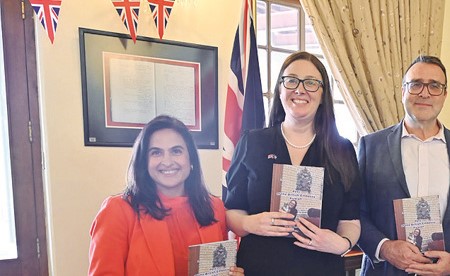
Osama Diab: The British Deputy Ambassador to Kuwait, Stuart Summers, affirmed that the book “Pets of the British Embassy, Kuwait” presents a different aspect of life within the British Embassy, far from the traditional image associated with diplomatic work. He expressed his delight at the launch of this edition, which documents the history of pets at the Ambassador’s residence and the British Embassy.
During the book launch event, he explained that the British are known for their love of pets, making it natural for pets to accompany British ambassadors in Kuwait over many decades, becoming part of the Embassy’s history and daily life. He added that the book includes photos and stories documenting this human side, noting that he tried to include a picture of his puppy, “Vidgit,” in the book, although Vidgit was not among the animals that resided at the Ambassador’s residence.
Summers congratulated the book’s authors, considering its launch a distinctive milestone marking the end of Rachel Riley’s professional career after more than fourteen years spent at the British Embassy in Kuwait, praising her efforts and contributions throughout those years.
For her part, Rachel Riley, Executive Secretary to the UK Ambassador to Kuwait, stated that embassies are not merely institutions concerned with diplomacy, politics, and international relations; they are also communities where staff live for many years, and within which memories, human relationships, and stories worthy of documentation are formed. She explained that during her tenure, she cared for several cats that lived in the Embassy, starting from “Mrs. Pickles” up to the animals currently present, noting that these pets became part of the Embassy family and contributed to building human bonds among staff of different nationalities and departments. She added that the idea for the book stemmed from her desire to preserve these stories and prevent them from being lost, emphasizing that the book is not only about cats and dogs, but also documents the stories of people, the values of kindness, and the sense of community that develop within the work environment, highlighting the human side of the British Embassy.
For his part, researcher in Kuwaiti-British relations and co-author of the book, Issa Dashti, expressed his happiness at the publication of his new documentary book, “Pets of the British Embassy, Kuwait,” which represents the first work he authored in partnership with British Ambassador’s Executive Secretary, Rachel Riley.
He clarified that the book documents, through photos, documents, and historical information, the pets cared for by the British Legation in Kuwait, and later by the British Embassy, as well as the animals adopted by British envoys and ambassadors over the past decades. He pointed out that pets were part of daily life inside the Embassy, and their presence was linked to several historical events and human stories that became part of the shared memory of Kuwaiti-British relations. He affirmed that this edition represents a first step in documenting this unknown aspect of the Embassy’s history, and that future editions will include additional information and documents as more sources become available.
Dashti appreciated the contributions of Stephen Freeth, grandson of Colonel Harold Dixon, and Abdul-Aali Samir Al-Hindal, for the photos, documents, and information they provided that enriched the project. He also expressed his gratitude to Rachel Riley for her cooperation and great enthusiasm in preparing the book, driven by her long-standing interest in caring for pets at the British Embassy.
