Hegseth: Iran is currently in its weakest military state... and we will strike it with ten times greater force if it targets ships in the Strait of Hormuz
&cropxunits=450&cropyunits=311&w=600)
US Secretary of Defense Pete Hegseth has threatened Iran with a response “ten times stronger” if it targets commercial ships transiting the Strait of Hormuz. Hegseth made these remarks on the sidelines of a meeting betwe
Translated by Qiyas from الأنباء — Original source
US Secretary of Defense Pete Hegseth has threatened Iran with a response “ten times stronger” if it targets commercial ships transiting the Strait of Hormuz.
Hegseth made these remarks on the sidelines of a meeting between US President Donald Trump and his Lebanese counterpart, Joseph Aoun, at the White House. He stated, “Iran has been given every opportunity to negotiate and demonstrate that it is acting reasonably regarding the Strait of Hormuz. But if it fires on commercial shipping vessels, we will strike them, as the President said, with ten times greater force, and every night we continue to weaken them further.”
Hegseth added that President Trump “has all the necessary options available. If they want to talk, they can; otherwise, they can deal with the Department of Defense.”
He reiterated, “Every night we continue to weaken them further,” noting that the US administration is keeping all options open if Tehran does not move toward negotiations. He emphasized that the military strikes directed by Washington against Iran aim to prevent it from threatening freedom of navigation in the Strait of Hormuz.
Previously, Hegseth had confirmed that Iran is currently experiencing its weakest military phase ever, but that it “still possesses capabilities.”
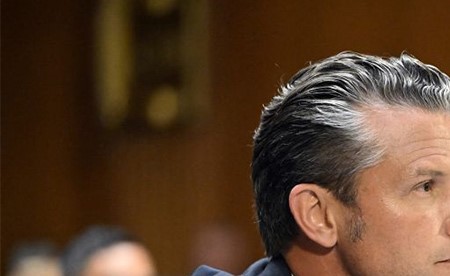
These comments came during a hearing of the US Secretary of Defense before Congress, which also featured Chairman of the Joint Chiefs of Staff Dan Caine. The session focused on the Trump administration’s request for an additional $67 billion in funding to help cover the costs of the war with Iran and replenish vital military stockpiles, as well as a request for $1.5 trillion in funding for Department of Defense operations in the upcoming fiscal year.
In his opening statement during the hearing, Hegseth said, “Be assured that every dollar allocated to the Department of Defense will be directed toward enhancing the lethal combat capabilities of our joint forces and establishing peace through strength.”
He clarified that the additional request “includes $21 billion to enhance readiness,” pointing out that one use of the additional funding is “to replace much of the equipment used during the recent US strikes against Iran.”
The Defense Secretary explained to lawmakers that this amount “covers the current period for certain aspects and also includes military salaries, operational costs, maintenance, and other expected costs through September 30 (the end of the current fiscal year).”
In assessing the results of US military operations, Hegseth said, “Iran is currently going through its weakest military phase ever. I have no doubt that it still possesses capabilities, but the extent of the damage we have inflicted on it during this series of operations has placed it in its worst position ever.”
The US Defense Secretary revealed that the cost of these military operations has reached approximately $37.5 billion so far.
For his part, Caine pointed out that the US armed forces need up to “$1.5 trillion to address future military challenges,” emphasizing that “it is absolutely essential that we stay one step ahead of our adversaries and secure the necessary funding before it is too late.”
He stressed that Americans must “recognize that the nature of war is changing. Technological progress is causing a profound and irreversible change in our combat methods, which requires providing the financial resources to properly equip the US military.”
