Minister of Communications: More than 270 government services via Egypt's Digital Platform by the end of this year
&cropxunits=450&cropyunits=300&w=770)
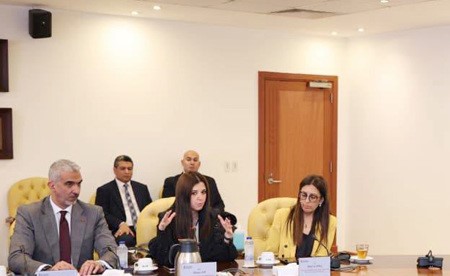
Cairo – Ahmed Sabry: Minister of Communications and Information Technology Raafat Hendy held discussions yesterday with members of the Digital Transformation Committee at the American Chamber of Commerce in Cairo regarding the priorities for the next phase in the telecommunications and information technology sector, alongside exploring mechanisms to foster an investment-friendly environment to attract further investments.
The meeting addressed efforts by the Ministry of Communications to accelerate the adoption of artificial intelligence technologies, digital infrastructure development projects, expansion of data centers and cloud computing, and the preparation of specialized digital talent, all within a supportive regulatory and investment framework.
During the meeting, Hendy emphasized that the Ministry’s work revolves around five main pillars: digital transformation, technology localization and job creation, digital infrastructure, digital capacity building, and legislation and governance.
He clarified that, under the digital transformation pillar, the Ministry continues to expand the availability of digital government services via the “Digital Egypt” platform, which currently hosts 242 services. The target is to exceed 270 services by the end of this year and reach approximately 450 services by 2030. Additionally, the digital ID has been issued, and the use of electronic signatures is being expanded, alongside completing the computerization of government entities to enhance performance efficiency, improve the business environment, and attract investments.
Regarding the pillar of technology localization and job creation, Hendy noted it rests on three main pillars. The first is the outsourcing industry and the export of digital services, with outsourcing exports reaching approximately $5.2 billion in 2025, targeting an increase to $8 billion by 2028. The second pillar concerns the localization of the electronics industry, particularly mobile phones, where production rose from 3 million mobile devices in 2024 to 10 million by the end of 2025, with a target to exceed 15 million devices this year and reach a production capacity of 30 million devices by 2028, increasing the local content ratio to approximately 45%.
He pointed out that the third pillar is artificial intelligence, which receives significant attention from the Ministry. Egypt launched the second version of the National AI Strategy in early 2025. Furthermore, the Applied Innovation Center developed the large language model “Karnak,” alongside developing practical applications in health, agriculture, and education.
Concerning the digital infrastructure pillar, Hendy explained that a new package of frequencies was made available to mobile operators last February. Efforts are underway to expand mobile network coverage and 5G services, as well as fiber optic networks. He noted that fiber optic cables have been laid to more than 1,250 villages under the “Decent Life” presidential initiative. The Ministry is also collaborating with relevant authorities to prepare a national strategy for data centers, considering them a fundamental component of digital sovereignty, given the growing interest from local and international investors in this sector. He affirmed that cybersecurity remains a top priority for the Ministry, alongside the expansion of AI usage and data reliance.
Hendy added that the Ministry is implementing a comprehensive system for preparing talent through various initiatives, including “Digital Generations Egypt,” programs by the Information Technology Institute (ITI) and the National Telecom Institute (NTI), the We School of Applied Technology, and Misr University for Science and Technology (MUST). He stated that the next phase will focus on enhancing training quality, advanced training, and developing specialized skills to meet labor market needs. The Ministry is also working on developing the regulatory legal framework for the telecommunications and IT sector and strives to contribute actively to international forums, thereby enhancing Egypt’s international leadership in communications and information technology.
He clarified that the growth rate of the telecommunications and IT sector reached 20.3% during the third quarter of the last fiscal year, recording the highest growth rate in the sector. The sector’s contribution to GDP stands at approximately 6%, with a target to reach 8% by 2030.
