Discovery of 3 Rock Tombs from the New Kingdom Period at the Bubastis Cemetery in Saqqara
&cropxunits=338&cropyunits=450&w=770)
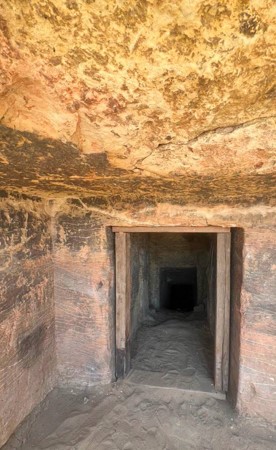
Cairo - Hanaa El-Sayed: In a new archaeological achievement added to the series of discoveries in the Saqqara area, the Egyptian archaeological mission working at the Bubastis necropolis has succeeded in uncovering three rock-cut tombs dating back to the New Kingdom period. This discovery was made during the mission’s scientific excavation works in the eastern sector of the site’s mountain edge. The findings include hieroglyphic inscriptions and important archaeological elements that shed light on new aspects of the history of the ancient Memphis necropolis, enriching knowledge about high-ranking state and society officials during that era.
Sherif Fathy, Minister of Tourism and Antiquities, affirmed that this discovery confirms that the Saqqara area still abounds with undiscovered archaeological treasures. He noted that the successive discoveries in the region highlight the exceptional civilizational value of Saqqara, one of the most important World Heritage sites. He praised the efforts of all Egyptian and foreign archaeological missions continuing their scientific work, emphasizing that each new archaeological discovery represents a qualitative addition to the understanding of ancient Egyptian civilization and contributes to completing the historical picture of one of humanity’s greatest civilizations.
For his part, Dr. Hesham El-Lethy, Secretary-General of the Supreme Council of Antiquities, clarified that the significance of this discovery extends beyond finding new tombs; it involves reviving the biographies of their owners and recovering pages of their history that had been buried under the sands for thousands of years. This grants each discovery profound historical and human significance, enriching studies related to Egyptian society during the New Kingdom.
Mohamed Abdel Badei, Head of the Egyptian Antiquities Sector at the Supreme Council of Antiquities, explained that this discovery is part of the archaeological study project of the Bubastis necropolis. It opens the door to further discoveries in upcoming seasons, especially as excavation works continue inside burial shafts and unexplored areas, which are expected to yield new archaeological and historical information. This will help complete the civilizational picture of the tomb owners and add new pages to the history of the Bubastis necropolis, one of the most important and richest necropolises in Saqqara in terms of archaeological evidence documenting various aspects of ancient Egyptian civilization.
Dr. Amr El-Tayeb, Director General of the Saqqara Archaeological Zone, noted that the first tomb belongs to a man named “Montuhotep.” Its northern walls feature finely crafted scenes of offering bearers and hunting, alongside a large depiction of the tomb owner seated with his mother, “Iah Hetept,” reflecting the family’s high social status. The tomb walls record several important titles held by the owner, including Hereditary Prince, Mayor, Servant of the King, “He Who Gladdens the Heart of the Ruler,” Director, Overseer of Foreign Lands, and Overseer of the Army of Khbesyt. These titles indicate that the tomb owner was among the senior officials of the administration and military at the beginning of the New Kingdom.
The tomb includes a burial shaft that has not yet been fully excavated; work is scheduled to resume in the next archaeological season. This may yield new information regarding the identity of Montuhotep’s mother and the history and role of this family in ancient Egyptian administration.
He added that the second tomb belongs to a man named “Baa-em-Waya,” also known as “Samut,” who held the title of Chief Merchant of the Temple of Ptah. The tomb serves as a comprehensive family record, preserving the names of his wife “Tuy,” who held the title of Mistress of the House, his mother “Atbiu,” who was a Singer of the God Amun, and the names of his four sons. This provides a rare image of the family and social life of a prominent figure from the New Kingdom.
The third tomb belongs to a man named “Nakhti.” Although it is in poor condition of preservation, the remaining inscriptions hold significant historical value. The owner’s name and title, Overseer of the House, have been identified, along with the name of his wife “Nefertptah,” who held the title of Mistress of the House. Among the notable elements of this tomb is a fragment of a column bearing a hieroglyphic text referring to the return of a commander from the land of Naharin, located in northern Syria. This text is of particular importance, as it not only helps date the tomb to the New Kingdom but also provides new evidence regarding the nature of Egyptian relations with regions of the Near East during that period.
