Calls to return to the "Memorandum of Understanding" and ensure freedom of navigation in "Hormuz"
&cropxunits=450&cropyunits=300&w=770)
Diplomatic efforts and communications have intensified among multiple parties in an attempt to de-escalate tensions and enhance stability in the region. Sheikh Tamim bin Hamad Al Thani, Emir of the State of Qatar, and Ir
Translated by Qiyas from الأنباء — Original source
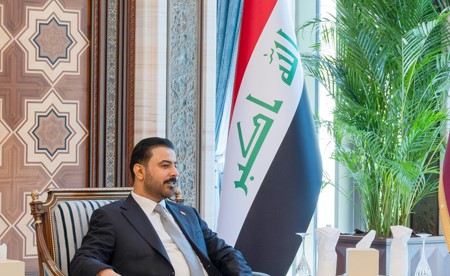
Diplomatic efforts and communications have intensified among multiple parties in an attempt to de-escalate tensions and enhance stability in the region. Sheikh Tamim bin Hamad Al Thani, Emir of the State of Qatar, and Iraqi Prime Minister Ali Al-Oldi emphasized the necessity of dialogue and ensuring freedom of navigation in the Strait of Hormuz. This came during the Emir of Qatar’s reception of the Iraqi Prime Minister in Doha, where they held an official round of talks at Lusail Palace.
The session included the Iraqi Prime Minister conveying his condolences and sympathies to the Emir upon the passing of the late Emir, Sheikh Hamad bin Khalifa Al Thani. Al-Oldi expressed his hope that the visit would contribute to strengthening cooperation between the two countries to broader horizons. The talks also covered bilateral relations and ways to enhance and develop them across various fields, as well as discussions on key regional and international issues, particularly developments in the region. Both sides reaffirmed the necessity for all parties to commit to dialogue and diplomacy, and to implement the agreements reached under the memorandum of understanding between the United States and Iran, including ensuring freedom of navigation in the Strait of Hormuz and enhancing regional stability.
Additionally, the Emir of Qatar received Turkish Foreign Minister Hakan Fidan at his office in Lusail Palace. The Amiri Diwan stated that the meeting reviewed the close cooperative relations between the two countries, along with the latest regional and international developments, foremost among them recent developments in the region, especially diplomatic efforts and joint coordination to de-escalate tensions and enhance security and stability in the region.
For his part, Arab League Secretary-General Nabil Fahmy warned of the dangerous repercussions of the current escalation in the region, particularly in the Arabian Gulf, calling on the United States and Iran to take immediate action to de-escalate tensions and return to the negotiation track to avoid further losses and destruction. In a statement, Fahmy said that continued escalation could lead to a loss of control over the situation, causing significant damage to all parties, as well as economic repercussions for the region and the global economy.
He reiterated that blatant Iranian aggression against several Arab states is firmly rejected and condemned, emphasizing that Arab countries have previously rejected war and should not be held responsible for its continuation or escalation as currently occurring. Fahmy called for mutual commitment to the memorandum of understanding signed between the Iranian and American sides last June, and for working to ensure freedom of navigation in the Strait of Hormuz in accordance with international law and UN Security Council Resolution 2817, while refraining from using it as a tool for pressure or economic blackmail. He stressed that the current phase requires all parties to uphold wisdom and recognize the consequences of escalation, emphasizing that returning to a path of negotiation and dialogue remains the only way to resolve outstanding issues.
