Aoun departs for Washington to meet Trump and discuss ways to stabilize the ceasefire and Israel's withdrawal
&cropxunits=450&cropyunits=300&w=770)
Beirut - Mansour Shaaban: President of the Republic, General Joseph Aoun, and First Lady Naima Aoun departed Beirut for Washington, DC, in response to an official invitation from US President Donald Trump. A Lebanese-US
Translated by Qiyas from الأنباء — Original source
Beirut - Mansour Shaaban: President of the Republic, General Joseph Aoun, and First Lady Naima Aoun departed Beirut for Washington, DC, in response to an official invitation from US President Donald Trump. A Lebanese-US summit is scheduled to take place next Tuesday at the White House. According to a statement from Baabda Palace, President Aoun will also hold meetings and consultations with several US officials to discuss the situation in Lebanon and the means to consolidate the ceasefire, restore security and stability to Lebanon generally and the south in particular, ensure the withdrawal of Israel from Lebanese territories it occupies, and extend the state’s authority over all areas.
President Aoun’s visit is his first to the White House since assuming office in early 2025. It comes amid Lebanese-Israeli negotiations mediated by the US, which have so far yielded six rounds of talks and a “framework formula.” President Aoun stated a few days ago that he would ask President Trump to pressure Israel to implement the “framework formula.”
President Aoun is the third Lebanese president to enter the White House. He was preceded by President Michel Suleman, who met US President Barack Obama in December 2009, and before him, President Amin Gemayel, who met President Ronald Reagan in 1982 during the Israeli invasion of Lebanon.
Currently, negotiations with Israel are taking place under complex field and political conditions surrounding Lebanon, both internally and externally, with continuous tension on the ground and in the air. Consequently, the US Embassy in Beirut advised Americans not to travel to Lebanon and to reconsider travel to the region.
In a statement, the embassy said: “Due to high tensions in the Middle East, the security environment remains complex with the possibility of unexpected escalation. We remind US citizens in the region to continue exercising caution and encourage them to follow the news for urgent developments. Americans traveling within or through the region should also verify with their airlines to ensure their flights are still scheduled. US citizens are advised not to travel to Lebanon and to reconsider travel to or through the Middle East.” The embassy issued these directives to its citizens.
Locally, the file of detained and convicted Islamists dominates political discourse. Attention is focused on the outcome of the parliamentary session, which lost its quorum when the issue was raised for discussion. The most notable comment came from MP Brigadier General Ashraf Rifi, who emphasized in a statement that “the discussions surrounding the last parliamentary session, the positions and clarifications issued afterward, particularly the clarification by the Lebanese Forces party, and the facts and data presented by lawyer Mohamad Sablouh, necessitate a responsible approach that transcends polemics and emotions. Any real progress can only be achieved through full coordination among Sunni MPs and cooperation with every political, parliamentary, or rights-based force that believes in this cause and seeks to translate the position into practical, legislative, and legal steps.”
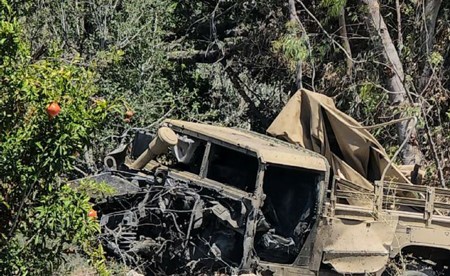
On the security front, the Army Command announced in a statement that a first sergeant was killed and an officer and a soldier were injured in an explosion involving a suspicious object attached to an Army vehicle in the town of Mansouriya, Sidon.
In the economic sector, MP Fadi Bustani, head of the National Economy, Trade, Industry, and Planning Committee, called for “expediting the maintenance and restart of the oil pipeline between Kirkuk and Tripoli,” warning that “continued delay will cause Lebanon to miss a new strategic opportunity amid the rapid changes the region is witnessing regarding energy projects.”
