Ministry of Education and Higher Education: Egyptian Baccalaureate eases the burden on families and ends the concept of the "single exam opportunity"
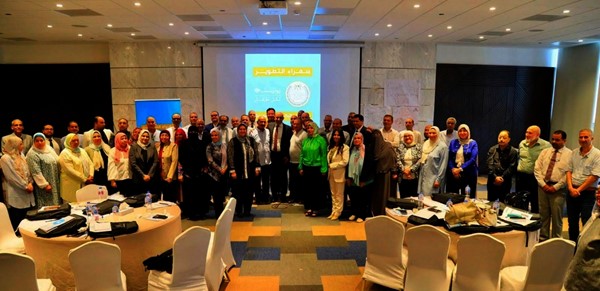
Cairo - Ahmed Sabri: Minister of Education and Technical Education, Mohamed Abdel Latif, visited the workshop for training teachers on the new curricula of the Egyptian Baccalaureate system, known as “Ambassadors of the
Translated by Qiyas from الأنباء — Original source
Cairo - Ahmed Sabri: Minister of Education and Technical Education, Mohamed Abdel Latif, visited the workshop for training teachers on the new curricula of the Egyptian Baccalaureate system, known as “Ambassadors of the Egyptian Baccalaureate,” organized by the Ministry in collaboration with UNICEF. This initiative is part of the Ministry’s commitment to preparing and qualifying teachers using the latest teaching methodologies, ensuring optimal implementation of the curricula and achieving the goals of developing the pre-university education system.
During his meeting with the participating teachers, Abdel Latif expressed full confidence in the competence of Egyptian teachers and their ability to implement the latest educational systems. He noted that all successful experiments carried out by the Ministry were fundamentally built on teachers and school principals as the core pillars.
He clarified that the current training programs aim not only to introduce the new curricula but also to build teachers capable of applying their philosophy, transforming it into interactive educational practices that contribute to preparing a generation equipped with the knowledge and skills necessary for the future.
He added that the role of supervisors in the coming phase will not be limited to monitoring performance, but will extend to supporting teachers inside classrooms, clarifying the philosophy of the new curricula, and providing practical assistance to ensure effective implementation.
He emphasized that the Ministry aims to transition from traditional teaching methods to modern learning approaches that focus on developing thinking, analysis, creativity, and problem-solving skills.
Abdel Latif stressed that the Ministry adopts an approach based on dialogue and listening to all stakeholders in the educational system, particularly teachers, based on the belief that they are the primary partners in the success of any development process and are best positioned to evaluate implementation mechanisms within classrooms. He noted that all policies and decisions adopted by the Ministry are grounded in field realities.
He pointed out that the Ministry has recently held extensive meetings with school principals and teachers across various governorates to listen to their opinions and proposals, incorporating them when preparing executive decisions to ensure their feasibility and achievement of objectives.
He affirmed that the main objective of implementing the Egyptian Baccalaureate system is to alleviate psychological pressure on students and parents, and to end the ordeal of the “single-opportunity exam” that Egyptian families have endured for decades. He explained that students will have multiple examination opportunities, providing a more flexible educational system that focuses on developing students’ abilities and allowing them to demonstrate their true level.
He added that the Ministry is currently reviewing the educational frameworks of the Baccalaureate curricula in collaboration with the International Baccalaureate Organization (IBO), ensuring alignment with international best practices while preserving national identity.
The Minister stressed that exams will be entirely based on learning outcomes outlined in the school textbook, model examples, and assessments approved by the Ministry, reinforcing the role of the school textbook as the primary source of learning.
During the meeting, trainees expressed their appreciation for the development philosophy adopted by the Ministry, affirming that the Egyptian Baccalaureate certificate system represents a significant step toward implementing the latest global educational systems. They noted that its inclusion of modern skills and learning methods aligns with international standards and contributes to developing students’ capacities and preparing them for the future.
They also praised the Ministry’s advancements in the evaluation system, emphasizing that the new system enhances fairness and equal opportunities, and provides students with multiple assessment chances, thereby reducing pressure and offering each student a genuine opportunity to achieve their aspirations.
