Germany proposes sending an EU force to Lebanon instead of UNIFIL
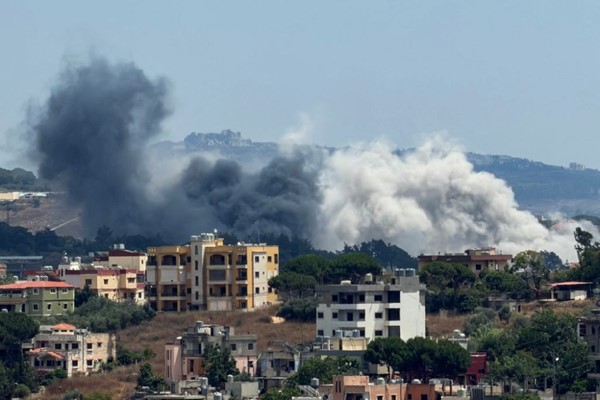
Beirut – Mansour Shaaban: Nothing new has emerged on the southern front beyond the routine aerial surveillance conducted by Israeli drones over any area or location, accompanied by a complete blackout surrounding the mis
Translated by Qiyas from الأنباء — Original source
Beirut – Mansour Shaaban: Nothing new has emerged on the southern front beyond the routine aerial surveillance conducted by Israeli drones over any area or location, accompanied by a complete blackout surrounding the mission of the US military delegation that arrived in Lebanon a week ago to establish an implementation mechanism for the first “experimental” zone in the south. This effort is part of executing the “Framework Formula” between Lebanon and Israel, who held the sixth round of negotiations in Rome. Meanwhile, President of the Republic General Joseph Aoun has begun preparations for his trip to Washington, where he is scheduled to meet US President Donald Trump next Tuesday to discuss the trajectory of developments on the Lebanese scene.
Until then, domestic concerns remain the primary preoccupation of politicians. Friday preachers have varied between calls for reconciliation, unity, and distancing from sectarian rhetoric, and appeals for the President of the Republic to launch initiatives to enhance citizens’ trust in the state, alongside discussions on the general amnesty file.
In this context, the sermon delivered by the Mufti of the Baalbek-Hermel district, Sheikh Dr. Bakr al-Rifai, commented on the collision of “efforts aimed at resolving differences regarding the required amendments to the General Amnesty Law with fundamental obstacles,” in a scene that “reflects the complexity of legislative consensus when it is linked to files carrying intertwined political and human dimensions,” as he put it. He also addressed the situation in the south: “This necessitates an explicit appeal to regional countries and the international community to assume their responsibilities before Lebanon turns into a battlefield for settling scores that leaves nothing behind.”
Following the conclusion of the parliamentary session as it stood the day before yesterday, the “National Concord” and “National Moderation” blocs, along with MPs Abdulrahman Bzari, Ashraf Rifi, and Karim Kabbaha, issued a statement highlighting their deliberations, “lamenting” the outcome of discussions and revisions related to the draft law on general amnesty, noting the failure to reach clear understandings achieved during the meeting held at the Council of Ministers building, chaired by the Prime Minister, which was based on introducing fundamental amendments ensuring the law’s justice and safeguarding the rights of detained Islamists and their families.
The statement considered that “what occurred cannot be regarded merely as a difference of opinion, but rather as a repeated retreat from the understandings upon which hopes were built, and a squandering of a national opportunity that could have closed a long chapter of injustice and suffering, and restored some trust between citizens and the state.”
Perhaps what accompanied the trajectory of this proposal since its inclusion on the session’s agenda, particularly its placement at the bottom of the list, was a sufficient indicator of the lack of seriousness accorded to this file, as if the facts were saying that there are those who do not want this obligation to take its natural course, leaving the suspicious to say, “Take me.”
Within this framework, MP Adib Abd al-Masih visited Maronite Patriarch Bechara al-Ra'i at the Patriarchal Summer Palace in Deir al-Qamar, where “Abd al-Masih presented the current situation in the country, particularly the atmosphere of tension and friction that emerged during the last session of the General Assembly of the Parliament,” emphasizing “the importance of adopting dialogue, de-escalation, and prioritizing the national interest at this delicate stage.”
Not far from what characterized the parliamentary session, Italian Ambassador to Lebanon Fabrizio Marcellino, at a seminar organized by his embassy in cooperation with the UN High Commissioner for Human Rights and Lebanese civil society bodies, attended by Justice Minister Adil Nassar, on the draft law abolishing the death penalty in Lebanon, stated: “The question posed before parliament is no longer whether Lebanon is capable of living without executing death sentences, as it has proven this for more than two decades, but whether it is now time to translate this entrenched practice into a clear and permanent legislative choice.” He considered that “embassies are places for diplomacy, but they should also be places for dialogue.”
Meanwhile, German Foreign Minister Johann Wadephul proposed empowering a European Union force in Lebanon to replace the UN Interim Force in Lebanon (UNIFIL), whose mandate ends by the end of this year. Wadephul said in statements to German media on Friday: “We in the European Union should explore through a European mandate whether we can ensure that no security vacuum occurs after UNIFIL’s mandate ends.” The German Foreign Minister considered that the presence of a stable government in Lebanon represents one of the most promising developments in the region at present. UNIFIL’s mandate ends in December next year, while the German parliament recently extended the country’s participation in the mission for the last time.
