Al-Anazi to prepare a comprehensive traffic study for Jabir Al-Ahmad City in line with current projects
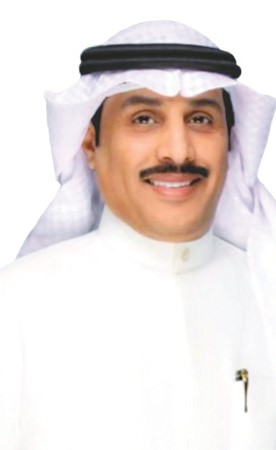&cropxunits=362&cropyunits=450&w=150)
Badah Al-Aniz, a member of the Municipal Council, has called on Abdullah Al-Anzi to prepare a comprehensive traffic study to enhance quality of life and sustainability in the Jaber Al-Ahmad Residential City project. In h
Translated by Qiyas from الأنباء — Original source
Badah Al-Aniz, a member of the Municipal Council, has called on Abdullah Al-Anzi to prepare a comprehensive traffic study to enhance quality of life and sustainability in the Jaber Al-Ahmad Residential City project.
In his proposal, Al-Anzi stated: “Based on the provisions of Kuwait Municipality Law No. (33) of 2016, particularly the powers assigned to the Municipal Council to study organizational and urban projects, approve the general structural plan, and monitor the compatibility of projects with urban planning requirements and the public interest, and in a commitment to support sustainable development, enhance quality of life, and ensure that infrastructure is ready to keep pace with urban and investment growth, I submit this proposal regarding the preparation of a comprehensive and proactive traffic study for Jaber Al-Ahmad Residential City.”
He added: “Jaber Al-Ahmad Residential City is located west of Kuwait City, covering a total area of approximately 12 square kilometers. It comprises 6,679 residential units distributed across 4,494 residential plots, 1,475 government houses, and 710 residential apartments. It also features an integrated service system including 36 government schools, 31 mosques, 4 suburban centers, 18 commercial shop groups, 3 health centers, a government complex, two police stations, four gas distribution branches, the Jaber Al-Ahmad Youth Center in Plot 7, the Jaber Al-Ahmad Girls Center in Plot 4, five fully serviced gas stations, and five bank branches.”
The city is no longer just a residential area; it is evolving into a commercial, service, and investment hub serving the community, driven by major strategic projects undertaken by both the public and private sectors. Notable among these are:
* **Aventura Mall:** A project with a built-up area exceeding 300,000 square meters, featuring an integrated commercial complex, international brands, a cinema, a hypermarket, an ice rink, and an investment residential zone comprising 72 townhouses and 204 rental apartments.
* **Jaber Mall:** An integrated commercial and administrative center consisting of five floors, including an open botanical garden covering 30,000 square meters, water features, shops, restaurants, commercial offices, clinics, a multi-purpose hall, and smart parking facilities.
* **The Olympic Village in Jaber Al-Ahmad:** One of the largest sports and leisure projects, built on an area of 213,600 square meters. It includes an Olympic stadium with a capacity of 25,000 spectators, an Olympic swimming pool complex, a squash and tennis complex, covered halls for individual and team sports, a hotel and delegation accommodation, and a medical and media center. It is expected to attract large numbers of visitors and regular attendees.
* **The Officially Approved Al-Jahra Corniche:** Located outside the boundaries of Jaber Al-Ahmad City but connected to it via traffic flow at its entrances and exits. Spanning approximately 5.79 million square meters and extending 7.3 kilometers, it consists of three main zones: the urban and commercial center, the marine and leisure area, and the eco-tourism zone. It will provide approximately 25,000 job opportunities, making it one of the region’s major attraction projects.
The city also includes approved investment sites for establishing a private university, a private hospital, private schools, commercial and administrative complexes, and investment housing, in addition to several other commercial and service projects.
Al-Anzi emphasized that the full operation of these projects will attract tens of thousands of visitors, students, employees, shoppers, and clients daily. This will directly impact traffic volume within the city and at its entrances and exits, particularly since the city is currently connected via three entrances and exits on Al-Jahra Road (80), a single entrance and exit on Doha Road, and one entrance and exit on Gamal Abdel Nasser Road (85).
He noted that most of these projects require specialized traffic studies for each individual project as a condition for implementation, which is an important technical measure to ensure project safety and mitigate direct impacts. However, the current planning reality necessitates a comprehensive and integrated traffic study for the entire city, taking into account the cumulative impact of all existing and future projects when operated collectively. Separate studies for each project do not reflect the true volume of expected traffic at the city level and its surrounding road network.
From this perspective, preparing a comprehensive traffic study at this stage is a necessary proactive step. It enables government authorities to identify future needs for the road network and address any deficiencies before the projects are fully operational, ensuring swift decision-making and the timely implementation of appropriate solutions.
Key factors driving this proposal include:
* The rapid urban and investment growth witnessed in Jaber Al-Ahmad City.
* The presence of major commercial, health, sports, educational, and tourism projects that will attract large numbers of vehicles daily.
* The limited number of current entrances and exits relative to the scale of existing and future development.
* The necessity of studying the cumulative traffic impact of all projects rather than relying solely on separate studies for each.
* Supporting the state’s direction toward sustainable urban development, improving quality of life, and enhancing traffic safety.
* Enabling government authorities to implement traffic solutions before congestion occurs, rather than addressing it after the fact.
Therefore, I propose the following:
1. Task the Executive Body of Kuwait Municipality, in coordination with the Ministry of Interior (represented by the General Directorate of Traffic), the Ministry of Public Works, the Public Authority for Housing (the supervising authority for the Jaber Al-Ahmad City project), and relevant entities, to prepare a comprehensive traffic study for Jaber Al-Ahmad Residential City, covering all current and future projects.
2. Evaluate the current capacity of the city’s entrances and exits and internal road network, and assess their ability to accommodate future traffic volumes.
3. Study the creation of new entrances and exits, or the development of existing ones, and improve connectivity with the main road network.
4. Study the development of intersections and internal roads, and propose necessary engineering solutions to address anticipated congestion.
5. Prepare a future traffic model illustrating the expected traffic volume in the coming years, linked to development plans and investment projects.
Al-Anzi concluded by emphasizing that this proposal does not aim to re-evaluate approved projects, but rather to establish a comprehensive traffic vision for Jaber Al-Ahmad City as an integrated urban system. This will ensure that all current and future projects align with infrastructure capacity, maintain smooth traffic flow, enhance public safety and quality of life, and spare the state from future costs associated with traffic treatments, which are often more difficult and expensive to implement after designated sites are completed.
