Specialists: Recovery from addiction is a continuous journey that begins with treatment.. and warnings of relapse
&cropxunits=450&cropyunits=299&w=770)
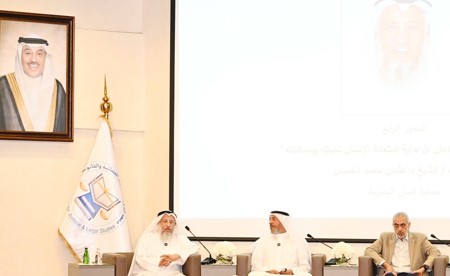
The Ministry of Justice organized its second seminar, titled “The Repentant Addict,” as part of the national awareness campaign against drugs under the slogan “A Nation That Protects You.” For his part, Dr. Rashid Al-Sah
Translated by Qiyas from الأنباء — Original source
The Ministry of Justice organized its second seminar, titled “The Repentant Addict,” as part of the national awareness campaign against drugs under the slogan “A Nation That Protects You.”
For his part, Dr. Rashid Al-Sahl, former dean of the College of Education at Kuwait University, emphasized that the belief that overcoming addiction equates to achieving recovery is a misconception. He clarified that recovery marks the beginning of the journey away from addiction, requiring continuous follow-up and psychological and social support from specialists.
Al-Sahl stated that a person in recovery faces five main challenges: the internal struggle between continuing in recovery or returning to addiction; the impact of negative thoughts; preoccupation with the past; poor self-management; and anxiety regarding society’s perception of them.
He explained that the first challenge is the internal conflict experienced by the recovering individual between doing what is right and reverting to previous behaviors. He highlighted the importance of taking personal responsibility, engaging in good deeds and worship to solidify recovery, and strengthening the positive aspects of one’s self.
He added that negative thoughts are among the most dangerous challenges, as they may lead the recovering person to believe that their circumstances will not change or that treatment is futile. He stressed the necessity of confronting these thoughts and not yielding to them, as despair can lead to relapse.
Regarding the past, Al-Sahl stressed the importance of the recovering person focusing on the present. He noted that the future is built through what one accomplishes today, whereas dwelling on past memories leads only to sadness and hinders progress. He warned against triggers that could lead to relapse, such as associating with former drug-using companions, frequenting places associated with substance use, or keeping items that remind one of addiction, emphasizing the importance of completely avoiding them.
**The Medical Definition of Addiction**
For his part, Dr. Adel Al-Zaid, a psychiatric consultant and former director of an addiction treatment center, affirmed that the prevailing view among some that addiction treatment centers are extensions of punitive or legal institutions in dealing with addicts is incorrect. He explained that misunderstanding the true role of these centers is one of the biggest obstacles to benefiting from their services.
Al-Zaid clarified that understanding the role of treatment centers begins with the medical definition of addiction. He pointed out that the World Health Organization defines addiction as a chronic neuropsychiatric disease characterized by numerous relapses, where the patient compulsively seeks to consume a substance or engage in a specific behavior despite the resulting harm, having lost control over their thoughts and behaviors.
He added that addiction is no longer limited to the use of narcotics or intoxicants but also includes behavioral addiction. He emphasized that describing addiction as a chronic disease necessitates distinguishing between the concepts of “recovery” and “cure.”
Al-Zaid compared addiction to chronic diseases such as diabetes, explaining that a cure implies the complete elimination of the disease, which is not achievable in chronic conditions. In contrast, recovery means living with the disease, minimizing its negative effects, and continuing to manage the condition properly. He noted that while a person with addiction remains under the diagnosis of the disease, they can live within the circle of recovery.
He pointed out that one of the key roles of addiction treatment centers is to alert patients that their condition is chronic and requires daily readiness to face its challenges, and to teach them how to maintain recovery independently, without constant reliance on the doctor or the treatment institution, through assuming self-responsibility and recognizing early warning signs of relapse.
**Continuing in Recovery**
For his part, Mohammed Al-Bashir, head of the psychiatry committee at the Basair Al-Khair Association, emphasized the importance of civil society associations in supporting those recovering from addiction. He noted that the greatest challenge facing addicts after treatment is maintaining recovery, which prompted associations to intervene after observing the struggles of individuals before and after repentance.
Al-Bashir stated that these associations work to alleviate the burden on the addict, as they need an educational sanctuary to support them after the treatment journey to prevent relapse, especially given their feeling that society does not accept them.
He explained that Basair Al-Khair Association focuses on religious, educational, and psychological aspects. He noted that an addict loses self-confidence and needs support after the treatment phase ends. The association provides an environment based on educational, religious, and psychological values, helping them continue their repentance and avoid thinking about relapse.
He added that years of addiction leave behind addictive behavior due to the company of bad friends, making the recovering person vulnerable to relapse. He noted that the association encourages the recovering person to appear in society with a new personality, even if they have to initially act it out, because people will accept this new persona. As the addictive behavior is eliminated, it becomes easier for the individual to transform from a means of destruction into a means of construction.
He pointed out that the association assigns tasks and responsibilities to recovering individuals to convince them that society needs them, addressing the prevalent notion among them that society does not accept them.
He clarified that the role of Basair Al-Khair Association is not limited to supporting recovering individuals but also includes raising community awareness. He affirmed that the addict needs an educational sanctuary and that the association possesses platforms on social media to spread awareness about the dangers of drugs, contributing to the protection of families and society.
For his part, Dr. Othman Al-Khamis affirmed that recovery from addiction is not the end of the road, but rather the beginning of regaining one’s life and future. He noted that the correct start lies in sincere commitment to God, returning to maturity, and abandoning addiction and all other sins.
Al-Khamis stated that addiction is an issue that weighs heavily on society, and it has increased with openness and social media. However, he emphasized that every disease has a cure, and the danger of addiction extends to religion, psychology, intellect, wealth, family, and society, requiring concerted efforts to address it.
He explained that humans need help in solving their problems, citing the Quranic verse: “And consult them in the matter.” He clarified that consultation and cooperation contribute to addressing problems, even if they cannot be completely eradicated at their roots. He pointed out the necessity for individuals to realize that they are not alone in this life, and that there are those who support them, stand by their side, and walk with them on the path of reform. At the same time, he warned against bad company and the devils of mankind and jinn who seek to corrupt humans and lead them away from goodness, affirming the existence of reformers who strive to guide and improve people.
Al-Khamis explained that the decision to repent may be difficult, but it is not impossible, especially with reliance on God. He cited the Quranic verse: “And those who strive for Us – We will surely guide them to Our ways.” He affirmed that the first step in treatment is believing that addiction is treatable and avoiding despair, as God guides whom He wills.
Estimates of addicts in Kuwait range between 30,000 and 40,000. Dr. Adel Al-Zaid stated that determining the true number of addicts is one of the most challenging statistical aspects, noting that many addicts do not seek treatment at rehabilitation centers until approximately five years after the onset of addiction, which causes official statistics to fall short of reality.
He explained that estimates are based on calculating three times the number of files registered in addiction treatment centers. He pointed out that when he left the center, there were approximately 10,000 files, leading him to estimate the number of addicts in Kuwait at around 30,000 to 40,000. He added that he has no information on whether the number has risen in recent years. Furthermore, he clarified the distinction between an addict and a user, stating that medicine does not consider a user to be suffering from a medical condition until they reach the stage of addiction or misuse.
