Minister of Labour Discusses Cooperation with International Labour Organization Delegation on Drafting Domestic Workers Bill
&cropxunits=450&cropyunits=300&w=770)
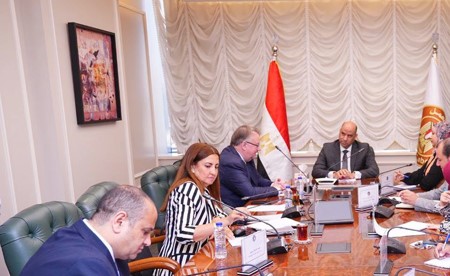
Cairo – Ahmed Sabri: Minister of Labor Hassan Radad received yesterday a delegation from the International Labour Organization (ILO) Cairo Office, led by Eric Ouchlan, to discuss and review the roadmap for drafting the d
Translated by Qiyas from الأنباء — Original source
Cairo – Ahmed Sabri: Minister of Labor Hassan Radad received yesterday a delegation from the International Labour Organization (ILO) Cairo Office, led by Eric Ouchlan, to discuss and review the roadmap for drafting the domestic workers bill, in implementation of President Abdel Fattah el-Sisi’s directives aimed at providing legal and social protection for this category, in line with international labor standards and relevant conventions.
During the meeting, Radad emphasized the depth of cooperation and partnership between the Ministry of Labor and the ILO, reiterating Egypt’s commitment to applying international conventions and standards as a fixed policy supported and guided directly by the political leadership.
The Minister of Labor noted that the Ministry has made significant progress in preparing the draft law through social dialogue sessions and consultations with various stakeholders. He stressed the importance of continuing coordination with the ILO in the coming phase, and of establishing an urgent timeline and implementation plan to complete all stages of the project, drawing on the best international experiences and practices in this field.
Radad clarified that the objective extends beyond issuing a law regulating domestic labor; it aims to formulate an integrated system that ensures effective implementation, enhances social protection, and provides a decent working environment for this category, thereby achieving a balance between the rights and obligations of all parties and contributing to the integration of domestic workers into the formal and regulated labor market.
The two sides also discussed several proposed pathways for finalizing the draft law, which will be monitored by specialized technical working groups, according to a defined roadmap and timeline, to ensure the completion of all stages of the project.
These pathways include axes and provisions related to social protection, skills, specializations, labor relations, fair employment, social dialogue, mutual rights and obligations between the parties to the employment relationship, and implementation and monitoring mechanisms, ensuring the effective application of the law’s provisions upon its issuance.
For his part, the ILO delegation presented several visions and proposals regarding cooperation and coordination pathways in the coming phase, reaffirming the organization’s readiness to provide technical support and exchange expertise, contributing to the completion of the draft law in accordance with best international practices and standards, and enhancing the principles of decent work and social protection for domestic workers in Egypt.
