Deputy Foreign Minister: Iran's despicable attacks warrant a serious pause
&cropxunits=450&cropyunits=300&w=770)
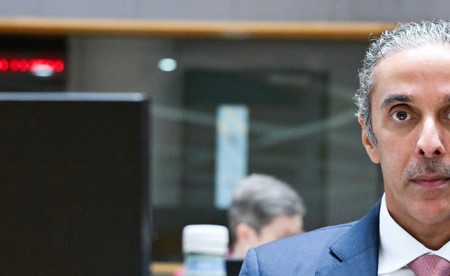
The third edition of the GCC-EU High-Level Forum on Security and Cooperation was held yesterday in Brussels, the capital of Belgium. Deputy Foreign Minister Ambassador Hamad Al-Muqdad participated in the proceedings of t
Translated by Qiyas from الأنباء — Original source
The third edition of the GCC-EU High-Level Forum on Security and Cooperation was held yesterday in Brussels, the capital of Belgium. Deputy Foreign Minister Ambassador Hamad Al-Muqdad participated in the proceedings of the third High-Level Forum on Regional Security and Cooperation between the Gulf Cooperation Council (GCC) and the European Union, which took place in Brussels.
Ambassador Al-Muqdad emphasized that the third edition of the forum builds upon the outcomes of the second edition, hosted by Kuwait in October 2025. He noted that the malicious Iranian attacks targeting Kuwait and other GCC states necessitate a serious stance against such violations, commending the solidarity of the European Union and its member states with the GCC countries. He concluded his remarks by expressing hope for elevating the partnership between the GCC and the EU, praising the EU’s role as a strategic partner of the GCC in supporting regional security and stability.
Also participating in the forum were GCC Secretary-General Jasem Al-Budaiwi, Bahraini Foreign Minister Abdul Latif bin Rashid Al Zayani, who serves as the current chair of the GCC Ministerial Council, and Kaja Kallas, the EU High Representative for Foreign Affairs and Security Policy and Vice-President of the European Commission.
Al-Budaiwi stressed that the convening of the third GCC-EU Regional Security Forum at this time is of utmost importance given the unprecedented escalation in our region, where Iran continues to choose escalation over diplomacy and dialogue. He affirmed that GCC countries support the path of dialogue and diplomacy and look forward to discussing with the European side how to engage in sincere consultation and close coordination in addressing Iran’s dangerous behavior toward the region.
He further noted that it is time for the strategic GCC-European partnership to embark on a new path based on the foundation laid in 1988, especially in light of recent challenges. Iranian attacks on oil facilities in GCC states and the closure of the Strait of Hormuz have triggered a global slowdown. The International Monetary Fund (IMF) has lowered its global growth forecast for 2026 to 3.1%, attributing this reduction to the war and instability in the Strait of Hormuz, through which approximately one-fifth of the world’s oil typically passes. The repercussions have extended across Europe, which has suffered its second energy shock in four years.
Al-Budaiwi pointed out that this regional shock has transformed into a global one, affecting the economies of both the Gulf and Europe. These new threats, born out of this conflict, call for reinforcing the relationship between the GCC and the EU, enabling a joint rather than individual response.
He outlined six proposed priorities to enhance GCC-European relations: first, coordinated political and diplomatic action; second, cooperation in regional security; third, connectivity through accelerating efforts on trade corridors and alternative routes; fourth, energy cooperation; fifth, drawing lessons from the current crisis; and finally, people-to-people ties, accelerated by advancing visa-free mobility as a practical foundation for interaction.
Al-Budaiwi concluded his speech by emphasizing that the partnership with Europe must extend beyond security toward genuine integration and a partnership that makes our peoples safer and our economies more resilient and stable.
For his part, Ambassador Sheikh Ahmed bin Hashel Al-Muscatari, Head of the GCC and Regional Neighbors Department at the Omani Ministry of Foreign Affairs and head of the Omani delegation, underscored the solidarity of GCC states in facing current challenges. He stressed Oman’s vision regarding the importance of preserving regional security and stability, as well as its commitment to freedom of maritime navigation and the safety of international trade routes in the Strait of Hormuz in accordance with international law and international maritime law. He also noted Oman’s continued close cooperation with the International Maritime Organization to enhance the security and safety of maritime navigation and support regional and international stability.
The forum addressed a number of regional and international issues of common interest, and ways to enhance cooperation and coordination between the GCC and the EU in various fields, contributing to consolidating security and stability and achieving sustainable development.
