Kuwait reaffirms commitment to combating human trafficking and enhancing international cooperation in this field
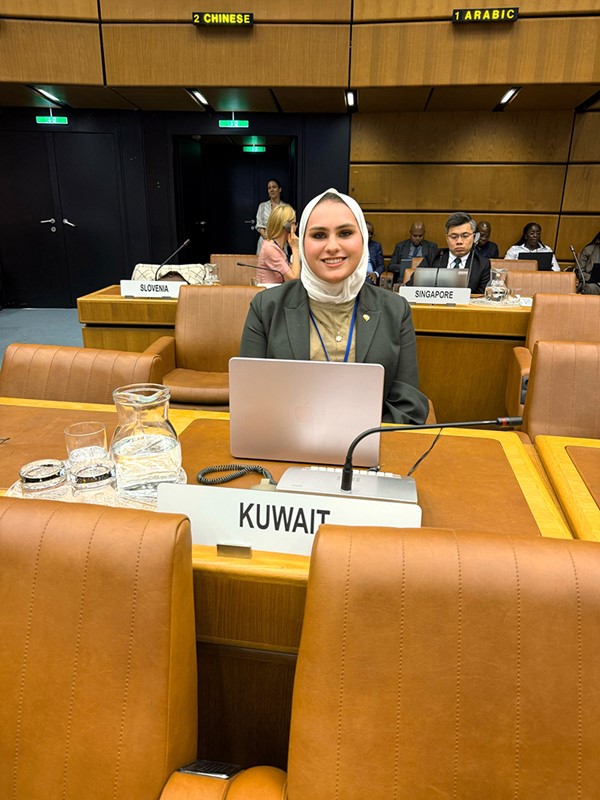
Kuwait enhances international cooperation to combat human trafficking at a meeting in Vienna
Translated by Alqyas from Al-Anba — Original source
Kuwait has reaffirmed its full commitment to implementing the provisions of the Protocol to Prevent, Suppress and Punish Trafficking in Persons, Especially Women and Children, and its readiness to continue cooperating with international partners to enhance efforts to combat this crime.
This statement was made during Kuwait’s intervention, delivered by Zainab Mansouri, Diplomatic Attaché at the Ministry of Foreign Affairs, at the 16th meeting of the Working Group on Trafficking in Persons, held within the framework of the Conference of the States Parties to the United Nations Convention against Transnational Organized Crime in Vienna, Austria.
At the outset of her remarks, Mansouri expressed Kuwait’s appreciation for the efforts undertaken by the United Nations Office on Drugs and Crime (UNODC) in monitoring the implementation of the Protocol, emphasizing that since acceding to it in 2006, Kuwait has viewed the review mechanism as a key tool for enhancing the effective implementation of international obligations through supporting dialogue among states, sharing expertise, and building capacity.
She noted that Kuwait continues to develop its national anti-trafficking framework through an integrated institutional approach, highlighting the adoption of the National Strategy to Combat Trafficking in Persons (2025–2028), alongside ongoing efforts to refine the national referral mechanism to improve procedures for identifying victims and providing them with protection and care in accordance with international standards.
She added that the Permanent National Committee to Combat Trafficking in Persons and Smuggling of Migrants, chaired by the Minister of Justice, plays a pivotal role in coordinating national efforts, monitoring the implementation of international commitments, and enhancing cooperation with international organizations, particularly UNODC and the International Organization for Migration (IOM).
Mansouri pointed out that Kuwait places great emphasis on building institutional capacity, implementing specialized training programs targeting judges, public prosecutors, and law enforcement agencies, as well as preparing a guideline for Ministry of Foreign Affairs staff and diplomatic and consular mission personnel to recognize indicators of trafficking crimes and handle potential victims appropriately.
She stressed that the true value of the review mechanism lies in its practical impact at the national level, through supporting legislative development, strengthening institutional coordination, and leveraging best practices, thereby transforming it into a sustainable platform for capacity building and institutional development.
She underscored the importance of keeping the review mechanism aligned with the rapid evolution of organized crime patterns, particularly given the growing link between trafficking crimes and technology and the digital space, emphasizing the need to enhance the exchange of expertise among states to improve the effectiveness of national and international responses.
Kuwait renewed its commitment to continuing cooperation with UNODC, the States Parties, and all international partners to support joint efforts to prevent trafficking in persons, protect victims, and hold perpetrators accountable.
