35% of Old Currency Exchanged Two Months After New Issue, Deadline Extension Expected Next Week
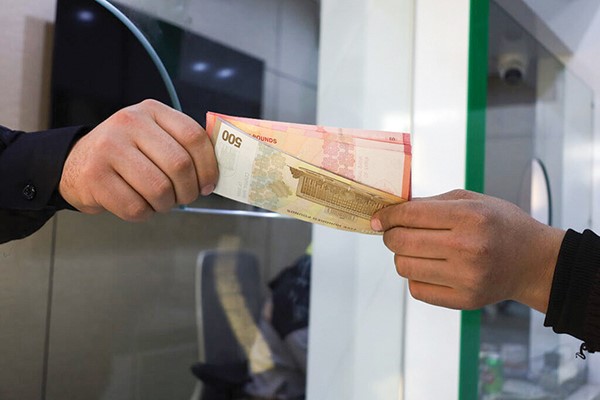
The Central Bank of Syria announced that 35% of the old currency has been exchanged, with expectations of a deadline extension next week to ensure the process is completed.
Translated by Qiyas from الأنباء — Original source
The Governor of the Central Bank of Syria, Dr. Abdul Qader Al-Husri, announced that approximately 35% of the old currency, valued at around 42 trillion old Syrian pounds (equivalent to 420 billion new Syrian pounds), has been exchanged, about two months after the introduction of new banknotes at the beginning of the year.
In a statement to the Syrian Arab News Agency (SANA), Al-Husri said that this achieved percentage confirms the soundness of the Central Bank of Syria’s implementation path. He added that they will continue working at the same pace to ensure the smooth and efficient completion of the process, serving the supreme national interest, enhancing financial stability, and supporting the economic recovery trajectory.
In a statement to SANA, the bank clarified that more than 13 trillion old Syrian pounds had been withdrawn and exchanged for their equivalent in new currency through the central bank’s branches across Syrian governorates. This amount was part of the 42 trillion old Syrian pounds previously issued by the Central Bank in preceding years.
For its part, the Syrian Al-Thawra newspaper reported that 14.7 trillion old pounds had been withdrawn from circulation and replaced with 147 billion new pounds. In a report, it noted that if the current pace continues, the full exchange of the old currency is likely to be completed by early July next year, whereas the bank had previously set a three-month deadline for the exchange.
Given this reality, Al-Thawra predicted that the Central Bank would issue a decision next week to extend the exchange deadline. Executive instructions for the provisions of Decree No. 293 of 2025, concerning the exchange of national currency, set a 90-day deadline for the exchange. In case of an extension, the Governor of the Central Bank of Syria must issue a decision to extend the deadline at least 30 days before its expiration.
Economist Samer Mustafa told Al-Thawra that the circulation of the new currency remains limited, accounting for no more than 20% of total transactions, nearly two months after its introduction in the markets, while the old currency still dominates daily transactions. Mustafa attributed the limited circulation to insufficient quantities released by the bank, weak oversight of money changers, and ongoing difficulties with the exchange procedures.
For his part, economic and banking expert Dr. Ibrahim Nafee Qoushji emphasized trust as the foundation of any successful monetary system and the link connecting citizens with financial institutions, which gives currency its real value in daily circulation. Regarding the Syrian case, Qoushji argued that the Syrian pound has suffered for decades from a negative reputation linked to unclear monetary policies, lack of transparency in managing currency issuance, and the withdrawal of damaged or old notes from the market.
