Al-Awadi: Cancer is Among the Most Prominent Health, Social, and Psychological Challenges
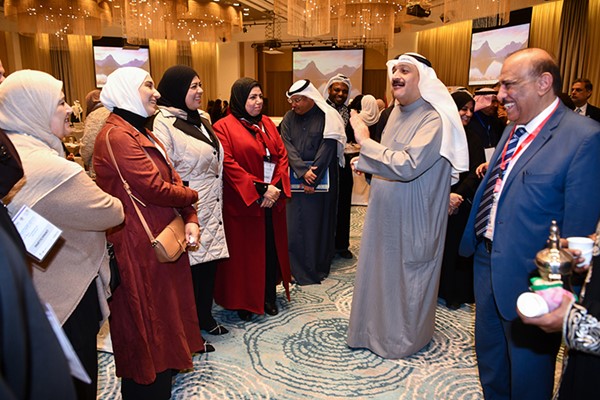
The Minister of Health emphasized that cancer is a health and social challenge requiring regional cooperation.
Translated by Alqyas from Al-Anba — Original source
Kuwaiti Health Minister Dr. Ahmed Al-Awadi confirmed on Monday that cancer constitutes one of the most prominent health, social, and psychological challenges globally, necessitating the unification of efforts and enhanced collaborative action to confront it.
Speaking at the opening of the Regional Oncology Conference and the 13th Gulf Federation for Cancer Control Congress, Minister Al-Awadi noted that recent years have witnessed rapid scientific progress, marked by the organization of numerous specialized oncology conferences, particularly in the Gulf region. This reflects the continuous scientific and technical advancements in cancer diagnosis and treatment.
He added that the conference serves as a leading regional platform that brings together a distinguished group of experts, providing a valuable opportunity to exchange knowledge and learn about the latest developments in cancer diagnosis and treatment. It also highlights efforts in prevention and early detection, while playing a crucial role in strengthening cooperation among government health sectors, the private sector, civil society, and academic institutions.
Minister Al-Awadi pointed to the pivotal role played by Gulf associations working in cancer control in supporting prevention and early detection programs. He noted that the Gulf Federation for Cancer Control is at the forefront of leading entities in formulating national strategies and evaluating their impact.
He clarified that developing the healthcare system includes improving the quality of services provided to cancer patients, including palliative care and psychological support, emphasizing that Gulf Cooperation Council (GCC) countries have seen notable progress in this regard.
He stated that scientific conferences represent an important opportunity to enhance joint research among GCC countries, which share similar genetic and environmental characteristics, and to encourage innovation and the utilization of modern technologies. Furthermore, they aim to empower patients, survivors, and those living with the disease, enabling their effective participation in the treatment process and health decision-making.
He underscored the importance of this conference, which highlights the advanced health infrastructure in Gulf countries, featuring specialized medical cadres and providing medications, palliative treatments, and psychological support. It also exemplifies an exemplary model of integration and cooperation between government and non-government entities.
He expressed his hope that the conference’s recommendations would contribute to elevating the level of healthcare and strengthening cancer control efforts in Gulf societies.
For his part, Dr. Khaled Al-Saleh, Chairman of the Board of Directors of the National Campaign for Cancer Awareness (KANC) and Chairman of the Conference Organizing Committee, stated in a similar address that the cooperation between the Kuwait Society for the Prevention of Smoking and Cancer and the Gulf Federation for Cancer Control represents a significant addition to the Federation’s journey. The Federation was granted observer status at the World Health Organization after nearly 24 years of joint efforts that contributed to raising community health awareness and promoting a culture of prevention and early detection.
Al-Saleh noted that the Gulf Cancer Registry recorded more than 310,000 cases between 1998 and 2020, with an annual increase rate of approximately 4.4 percent.
He explained that the Gulf Federation has adopted several training programs aimed at primary healthcare physicians and dentists, as well as programs to promote the culture of screening and early detection. He highlighted KANC’s success in training approximately 182,000 female students on breast self-examination since its launch in 2010, alongside implementing the Joint Gulf Week for Cancer Awareness and publishing the Gulf Journal of Oncology, which is indexed in global medical databases.
He emphasized that the conference serves as an important platform for exchanging expertise and enhancing research cooperation among countries in the region, as well as for staying abreast of the latest developments in the fields of diagnosis, treatment, and psychological support, expressing his hope that its proceedings will yield practical, actionable recommendations.
