Yes, the Minister of Justice... Indeed, Allah subjugates through power that which He does not subjugate through the Quran.
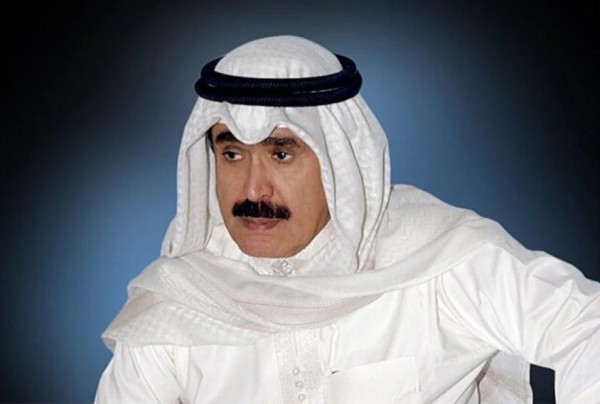
Justice Minister and Advisor Nasser Yousef Al-Samait is working quietly but with great determination to realize the vision of developing the state’s laws, in accordance with the directives of His Highness the Amir. The Minister conveyed His Highness’s words: “You have my full green light to amend the legislative system.” This indicates that the state is proceeding along a carefully considered path to modernize its institutions and legislation in line with contemporary needs across all sectors.
The ongoing legal workshop entails considerable hard work, as most laws were enacted decades ago—some as far back as 1961 or even before independence—and many now require updating. This means the legislative process will continue until all laws are revised, with the deadline set by Minister Nasser Al-Samait being the end of December 2027.
This effort falls within the broader framework established by the political leadership to develop the state as a whole, proceeding along multiple fronts across all sectors, not just within a specific ministry. For example, the Cabinet’s decision to grant various benefits to the children of Kuwaiti women whose citizenship had been revoked is viewed in the context of the need for greater social stability required by domestic conditions, so as to align with external circumstances.
On this basis, these benefits must be generalized so that everyone who has lost their citizenship can benefit, including those residing illegally—commonly referred to as “Bidoon”—since they constitute a large segment. Strict measures against them could lead to social problems and even crimes. The only solution that would spare Kuwait much trouble is to create conditions enabling them to regularize their legal status by issuing them passports, similar to those granted to the children of Kuwaiti women and others whose citizenship was revoked, allowing them to travel to seek opportunities abroad or to regularize their status by reclaiming their fathers’ citizenship in the countries of origin, provided thorough investigations confirm their circumstances.
The repercussions of revoking citizenship have created social problems and placed additional pressure on the so-called “Bidoon,” as this group has grown significantly. This necessitates solutions that serve social and economic security, as well as Kuwait’s reputation worldwide. Accordingly, resolving this file is imperative and has been overdue for a long time, not just today.
As is well known, the number of “Bidoon” at the outset of the problem in the 1960s did not exceed ten thousand. Today, due to marriage and births, the figure exceeds one hundred thousand.
Many of these individuals wish to move to countries where they see opportunities to live and work freely. Many hold advanced degrees and are in demand in those countries. Therefore, if they are issued full passports (as colloquially expressed), they would be eligible to shed the “Bidoon” status that has made their lives difficult and to acquire the citizenship of those countries.
Indeed, sovereign rights are not subject to negotiation, including the revocation of citizenship, which falls under higher-order rights that must be respected. At the same time, the Head of State directs ministers, assistants, and state officials to act in accordance with the principle that justice takes precedence over all else. This approach is grounded in a maxim attributed to the third Caliph, Uthman ibn Affan, which remains relevant to every era, state, and ruler striving to build a nation founded on justice and to foster stability across all levels. He said (may God be pleased with him): “Indeed, God upholds through authority what He does not uphold through the Qur’an.” In this light, the remarks conveyed by Minister and Advisor Nasser Al-Samait on behalf of His Highness the Amir fall within this framework, urging all members of the government to work toward providing facilitations for everyone affected by citizenship revocation, as well as for those considered “stateless.” Modernizing the state begins with social stability, which is reflected in the economy, politics, and public security.
